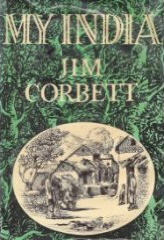
Jim Corbett is known for his adventure filled books but I didn't want to read all that. I wanted to know about JC the man more than the hunter. That is precisely the reason why I picked up this book and how well it served that purpose.
My India describes the compassionate side of the man, his innate knowledge of India of his times, understanding of caste prejudices of rural country, his deep love for the people he was born and raised among. For example, how do you expect an European to know where a village woman keeps her jewelry in a hole in the ground near her cooking place? Or why would someone drink an entire cup of hot and sweet tea ,despite not being accustomed to it, because leaving some of it in the cup conveys to the hosts it wasn't good enough, if not for the unspoken bond with the land and it's people?
There is an old world charm to his writing characterized by long uninterrupted sentences. Symbolically speaking, his writing style resembles a village stream, gentle and slow. He wasn't trying to write in a literary sense, just penned his thoughts down in a simple manner.
Although he doesn't overtly express his sorrow at losing some of his closest people who he had known for many decades, but the pain comes across in his writing. He had a sense of humour as well. For example, how hilariously he describes his embarrassment during a football match when his team members (labourers and headmen who worked under him at Mokameh Ghat) would stop chasing the ball in the middle of the play and rush to their Sahib, whenever he tripped over because they want to get him on his feet and dust him off while the opposition watched in bewilderment.
A question lingered on in my head after the book came to an end. Would he not have felt out of place had he chosen to move back to England after Independence? After all Edward James Corbett was a man from the hills of Nainital.




0 Comments